Les Epicuriens Weekly Books and Culture News
- Dimitris Schoen
- Mar 28
- 4 min read
This edition of Les Epicuriens Weekly Special opens with our books selections. Our main focus is an exploration of literature and culture through L’étranger, the novel by Albert Camus, and its reimagining on stage by the French filmmaker François Ozon.
Books releases :
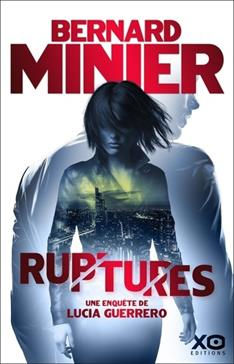
Continuing our literary focus, readers interested in thrillers about power, technology, and human stamina will find Ruptures by Bernard Minier compelling. Ruptures builds on the atmospheric tension and intricate plotting of Minier's earlier works. The novel distinguishes itself through timely themes and sustained suspense, making it a significant addition to our recommendations.
Lucia Gererro is the central figure in Ruptures by Bernard Minier. As a renowned police investigator, she seeks the truth behind a crisis impacting millions. On Monday, 28 April, Spain experienced its largest power outage ever. The blackout disrupts daily life and proves fatal for Emma Bosch, director of StarCo’s Spanish branch. Her father, in the hospital, depends on an artificial respirator. Though urgently called to his bedside, Emma cannot reach the hospital in time. Lucia’s investigation finds that Emma's death may be linked to the blackout and a broader threat involving StarCo, drawing the main characters into a transnational plot.
Meanwhile, the narrative extends to the United States, where a worrying pattern emerges: several women who previously worked with Milton Gail, the billionaire founder of StarCo, are found dead, and each was pregnant. As Lucia Gererro continues her investigation in Spain, connections between the blackout and these deaths become apparent, drawing her into a complex worldwide case. The escalating mystery compels Lucia to follow the evidence from Madrid to New York, where she uncovers links denoting a powerful conspiracy involving StarCo and its founder. Her pursuit of the truth gets increasingly urgent as she connects the Spanish crisis to the events unfolding in the United States.

Shifting from fiction to philosophy, the question arises: Is lying inherently immoral? This enduring question has challenged philosophers such as Saint Augustine, Pascal, and Kant. Each has proposed distinct perspectives. It is evident that lies do not eliminate truths. In certain circumstances, lies may be necessary, serving as the only means to reveal hidden realities. In the contemporary era, the concept of lying has evolved. As the author observes, society now refers to 'Post Truths.' Instead of merely lying, individuals construct alternative truths. Influential political figures worldwide contribute to this trend. Is this development irreversible? The book provides a concise history of lying through the works of Homer, Molière, and Rousseau. It also engages thoroughly with this issue. The examples of statesmen and thinkers such as Tomáš Masaryk and Václav Havel may offer ground.

Turning to a different form of discovery, Walking Cure, by novelist Annabel Street, offers a voyage and examines the impact of walking on health. I relate to this topic personally, as I enjoy visiting new places, landmarks, and historical sites. I find pleasure whether in the mountains or at the beach. Walking consistently leaves me feeling more energised and revitalised in my daily routine. With gentleness and insight, the author fuses personal accounts with evidence-based benefits of walking. She highlights its positive effects not only on physical health but also on mental health and the pursuit of culture, history, and knowledge.

To revisit the cultural heart of this edition, today in Les Épicuriens Culture, we present a review and discussion of one of the most significant works of French literature by Albert Camus. The novel was recently adapted by François Ozon as L'étranger, featuring Benjamin Voisin, Rebecca Marder, Pierre Lottin, and Swann Arlaud. Ozon’s adaptation distinguishes itself through several creative choices, such as staging the entire film in stark black-and-white and focusing more closely on Meursault’s emotional isolation through extended silences and close-up shots. The film also introduces a reimagined final monologue that provides new insight into Meursault’s acceptance of the world’s indifference, diverging from the novel’s original conclusion. These differences encourage viewers to reflect on the narrative's meaning in both its literary and cinematic forms.
The plot unfolds in Algeria. L'Étranger revolves around Meursault, a young man portrayed as attractive, depressed, selfish, and indifferent. His reaction to his mother’s death is marked by a lack of grief or emotion. Soon after, he begins an intimate relationship that becomes serious, though when asked if he intends to propose, he responds with indifference: 'I don't care.' Challenging individuals cross his path, yet he remains emotionally detached. In the end, Meursault kills another man, showing no remorse.
Meursault’s actions and attitudes reflect the existential and absurdist philosophy at the heart of Camus’s work. The novel illustrates Meursault’s confrontation with the fundamental absurdity of existence. Camus explores the idea that life lacks inherent meaning and that traditional moral frameworks can seem arbitrary. Meursault’s rejection of social conventions and emotional detachment emphasises the tension between humanity’s search for purpose and the indifferent universe. His journey, especially as he comes to accept the lack of clear answers or moral judgments, challenges readers to question how individuals can live authentically in a world without ultimate meaning.
At Les Epicuriens Culture, we greatly appreciated the film adaptation. People seeking action films may find it unappealing. It is a deeply philosophical work that invokes reflection. The film is presented entirely in black and white. Benjamin Voisin delivers a remarkable performance as Meursault. Rebecca Marder excels as Marie Cardona. This adaptation faithfully portrays the essence of Albert Camus’s iconic novel. The philosophical themes from both the book and the film are significant. Below is further insight into the philosophy of the absurd, as Marilyn Maeso explains in an interview on France Inter.